

What is a Joint Loan? Everything You Need to Know
A joint loan makes both your names appear on one loan. This is usually an avenue couples take when purchasing cars or financing home repairs. The combination of adult children and their parents is another trend that is seen to increase purchasing power.
There are also joint loans for bad credit, offered to people with low credit scores. Your past issues can be combined with someone having better credit, and you are likely to get approved.
Your joint financial resources are more favourable to the lenders. The interest rates would be even better. It is less frightening to have a person by your side. Your borrowing capabilities increase significantly with an assured partner.
What is a Joint Loan?
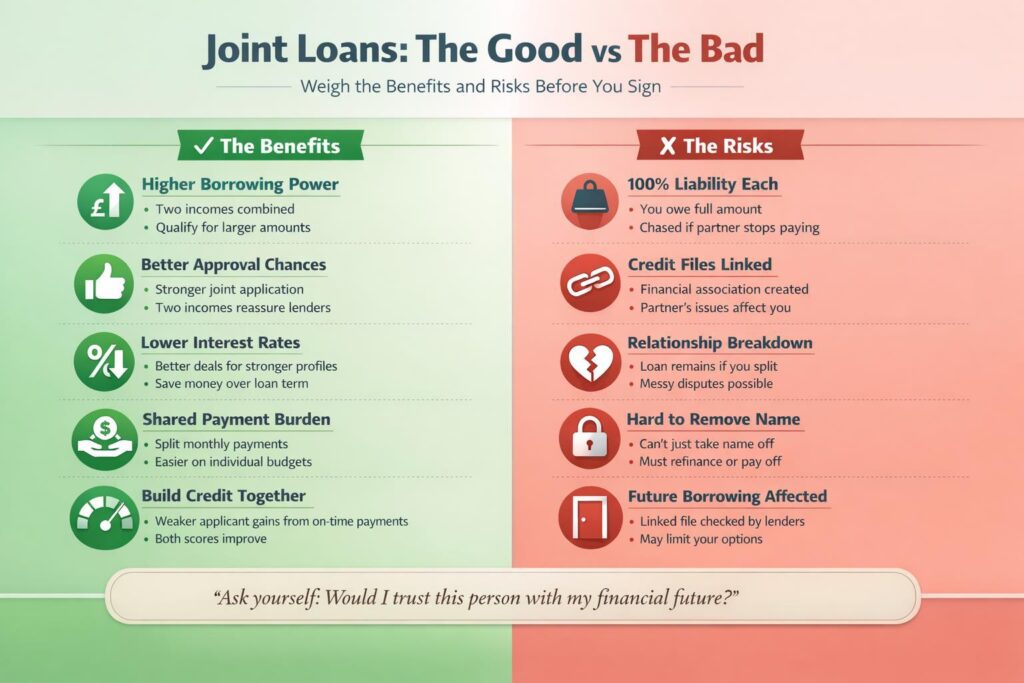
A joint loan brings two or more people together on a single borrowing agreement. You and your partner (or whoever you're applying with) both sign. You share equal responsibility for paying back every penny.
The legal term "joint and several liability" means you're both on the paper. The lender can come after you for the full amount, not just your half, if your co-borrower stops paying. They don't care who pays what, but want their money back.
Joint loans are generally taken out for larger expenses. You may be fantasising about a new car, a kitchen makeover, or a wedding. The lenders will examine your two incomes to determine whether you can repay the loans.
Joint loans for bad credit can be taken out. You might qualify for loans by teaming up with someone who has better credit. The lenders say yes as they know there's a second person responsible for repayment.
- Joint applications have higher approval rates
- You might borrow larger sums than if applying alone
- Monthly payments often feel more manageable
- Application forms ask for both financial histories
- Most high street banks offer joint loan options
Who Can Apply for a Joint Loan?
You have plenty of options for whom to apply to. Husbands and wives commonly share loans, but civil partners enjoy the same rights and access.
Unmarried couples living together can also team up financially. Many lenders don't care about your relationship status. They want to know you can pay them back.
Many parents often join their adult children for first car purchases or help with university costs. The siblings apply together when buying shared property or starting small businesses. Any close friends can become loan partners if they trust each other.
The business colleagues sometimes use joint personal loans rather than complex business financing. The requirements stay pretty simple across the board. Both must be residing in the UK, be 18 years old, and demonstrate a consistent source of income.
The lenders check both your backgrounds thoroughly before approval. They would examine your work history, current income, outstanding obligations and expenditure.
Types of Joint Loans Available
The right joint loan also improves financial status. Let's see your options.
Personal Loans
Joint personal loans give you cash without requiring collateral. You can borrow from £1,000 up to £50,000. The repayment terms stretch from 12 months to 7 years.
These loans are the best for small projects or expenses that don't need secured funding. The application process takes just days, not weeks. Both your names appear on all paperwork, and either of you can contact the lender about the account.
Car Finance
Buying wheels together makes sense when you'll both use the vehicle. Joint car finance comes as either a hire purchase or a Personal Contract Purchase (PCP) deal. The car itself acts as security. You will get lower interest rates than with unsecured loans.
You can put both names on the V5 registration document. This makes joint ownership official. Most dealers handle the paperwork for you. Your monthly payments are based on the vehicle price, your deposit, and your combined credit profiles.
Home Improvement Loans
Joint home improvement loans help fund anything from new bathrooms to loft conversions. You can choose between secured and unsecured options (using your property as collateral).
Secured loans offer higher amounts and lower rates, but put your home at risk if you can't pay. Many lenders offer specialised renovation packages with features tailored to your building projects.
Debt Consolidation Loans
The partners can combine their debts into a single loan to simplify their finances. Instead of having to make several payments with varying due dates, you make a single payment every month. This tends to come at a reduced general interest rate and will save money in the long run.
The application considers all existing debts from both parties. Some lenders pay off your old accounts directly, ensuring the funds are directed where they should be. This type of loan is best when you have a clear plan to avoid building up new debt afterwards.
What Happens if the Relationship Ends?
The joint loans outlast many relations. The loan contract remains legally binding when partnerships break down. Both borrowers remain 100% responsible for the debt regardless of personal agreements.
The lenders won't split the debt between you, even with divorce decrees or separation agreements. They hold the original contract terms above any later arrangements. This fact surprises many people.
There are various choices that you can make in such a situation. One person might take over the loan payments entirely, though they're still in both names. Some people manage to refinance on their own and remove their ex-partner from the equation.
The legal advice becomes crucial when disputes arise over joint debts. A solicitor can help draft agreements about who pays what, even if the lender still holds both parties responsible. You can make some written agreements before taking out joint loans.
| What Happens When a Relationship Ends | ||
| Situation | What Happens | Your Options |
| Both agree to keep paying | Loan continues as normal | Keep paying as agreed |
| One person stops paying | Other is chased for full amount | Pay the full amount or face default |
| Want to remove one name | Lender rarely allows this | Refinance in one name only |
| Selling shared asset (e.g., car) | Use sale funds to clear loan | Sell and split any remaining money |
| Dispute over who pays | Lender still expects payment | Seek legal advice, keep paying |
| One person dies | Other becomes fully responsible | Life insurance may cover the balance |
| One person moves abroad | Both are still liable | Legal action can cross borders |
| Divorce or separation | Loan terms unchanged | Court can order who pays, but the lender is unaffected |
How Joint Loans Affect Your Credit Score?
The loan shows up on both your credit reports immediately after approval. The credit reference agencies create what they call a "financial association" in their systems.
Your partner's financial behaviour affects your credit future. Your on-time payment helps both your credit scores grow stronger. Any late or missed payments damage both profiles equally, regardless of who forgot to pay.
The financial association stays on your records even after you've paid off the loan. You can file a "notice of disassociation" with credit agencies if you later separate from your co-borrower. However, this only works if you've closed all shared accounts.
Your joint loan status gets checked by the three main credit agencies: Experian, Equifax, and TransUnion. The lenders can see this shared responsibility when you apply for future credit.
- Credit scores improve faster with perfect joint loan payments
- Lenders view financial associations
- Joint applications create two sets of credit footprints
- Your debt-to-income ratio calculations include joint commitments
- Credit monitoring services flag joint account status changes
Conclusion
The decision to borrow together affects both your finances for years to come. You will be able to discuss payment arrangements and the worst-case scenario freely, then sign whatever is necessary.
It is possible to store a copy of all loan documents in a safe. Established deadlines to prevent cases of missed deadlines, which ding both credit scores. You may discuss a written contract between yourself concerning who is to pay what, although the lender views you as equally liable.