
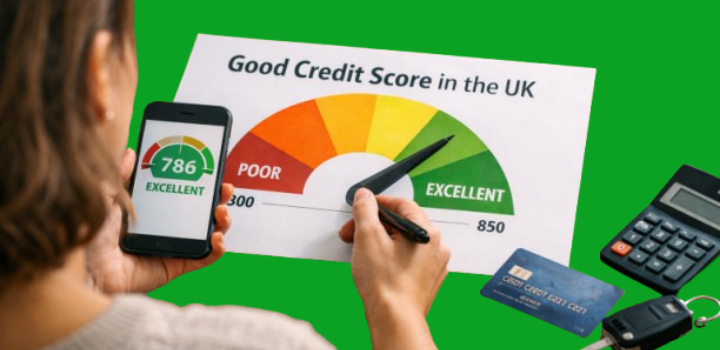
What Is a Good Credit Score in the UK in 2026?
Does the credit score seem like a mysterious number? Not able to understand if they are actually good enough? Then, you must start by knowing “what is a good credit score in 2026?”
At the same time, you must understand how these scores can affect your finances. Reviewing your credit history from time to time is crucial. It can help you choose the right opportunity.
If your scores are not perfect, it would be wise to apply for loans for bad credit in the UK. This financing option has flexible criteria set for poor credit borrowers.
To find out about your scores, you must explore the different credit scoring models. Recently, Experian has updated its scoring system. They have now started following the 0 to 1250 scoring pattern.
Credit scores are important as they help lenders assess the extent of risk. With a higher score, the chances of loan approval will be higher. Besides, getting suitable interest rates will be possible with good or fair credit scores.
On the other hand, limited opportunities will be available for you with poor credit scores. Get to know more about good scores by exploring this blog.
What defines a good credit score?
This is a three-digit representation of your creditworthiness. It breaks down your financial history and how you have managed past payments. This is crucial information that lenders mostly look for when handling loan requests.
There are three main credit reference agencies actively operating in the UK. They are Equifax, Experian and TransUnion. They pursue a different scoring pattern.
What’s a good score according to these agencies?
| Agency | Score range | “Good” score | Lender risk view |
| Experian | 0 – 1250 | 861+ | Lower risk if above 861 |
| Equifax | 0 – 1000 | 531+ | Moderate to low risk above 531 |
| TransUnion | 0 - 710 | 604+ | Risk lowers above 604 |
The reason behind different scores by different CRAs is that they collect from different lending sources. Moreover, not all loan providers report information to all the agencies. It would be better to obtain credit scores from different agencies.
Check each score individually to understand where you stand. If your credit scores fall within good to excellent brackets of these agencies, you are on the safer side. The lenders are not going to consider your loan application risky.
Why are credit scores important?
They provide a snapshot of how responsibly you have managed borrowing in the past. It is crucial for you to understand how they can impact your financial health.
Determines the chance of loan approval
With good scores, you are most likely to get approved for loans easily. Perfect scores lower the lending risk, while lower scores may lead to rejections.
Influence interest rates
The borrowing cost is determined by your credit scores. With higher scores, getting loans at suitable rates is easier. The overall loan cost increases when your credit scores are not favourable.
Decides borrowing limits
With excellent or good scores, you can explore higher borrowing limits. The lender feels confident about your repayment potential. For this reason, they are willing to extend the borrowing limits for you.
Affect mortgage application
For mortgage lenders, credit scores are a priority. They analyse your credit history to decide if loans should be approved or not. Besides, these scores play a crucial role in determining the size of the deposit you must provide.
Impact tenancy agreements
Landlords also use your credit score to decide whether or not to rent out their home to you. They perform a few checks that will disclose your credit history. With good scores, you can win the confidence of the landlord.
Reflect your financial habits
Your credit scores reflect if you have paid your bills on time, have managed balances on your credit card, have avoided further loan applications and have kept credit accounts longer. All these combine your financial habits, which can turn out to be responsible or irresponsible.
What factors affect your credit scores?
Your credit scores are a combination of a few things and not a single unit representation.
Payment history
Your track record of paying bills. Timely payments help your scores to elevate positively.
Credit utilisation ratio
This indicates the amount of credit, i.e. available to you, is in use. Keep your credit card balances low and below the limit provided.
Length of credit history
A long track record of credit scores is preferable to lenders. For this reason, a lengthy credit history should be maintained. Avoid closing older accounts.
Credit Mix
Having experience in handling different types of credit accounts, like loans, credit cards, mortgages etc., is beneficial. It demonstrates that you are capable of managing different credit forms responsibly.
Recent applications
When you apply for a loan, a hard search will be conducted. This does not happen when you pre-qualify for any loan. Avoid applying for multiple loans at the same time. Many applicants submitting in a shorter span will negatively impact your credit scores.
What are the simple ways to improve credit scores?
Being in bad credit is not a curse, but a practical solution which can be improved. The improvement process should begin as early as possible, as this will be better for your credit history. The simple ways to upgrade your credit scores are:
Pay on time: Try hard to disburse pending payments and schedule upcoming payments on time.
Keep balances low: If you use 30% of the available credit, this will lower your credit scores.
Apply for loans one at a time: Do not apply with different lenders at the same time. Hard checks will lower your scores.
Register to vote: You must be on the electoral register. This lets credit reference agencies verify your identity.
Correct errors: Review your credit report regularly so that you can fix errors, as they can also damage your credit scores.
The bottom line
There is no standard or typical good credit score in the UK. However, you need to be within the good score range of all the credit reference agencies. This will allow you to explore potential borrowing opportunities.
If your credit scores have lowered, you must take immediate action to reverse them. The improvement might not happen overnight. However, there will be gradual progress with time.